Areas we serve
Designed and Installed Across British Columbia
Five Eight Twelve is based in Vancouver and works throughout the province, from the Lower Mainland to the Okanagan and Vancouver Island. The pages below cover the markets where local conditions, municipal requirements or our own completed work are different enough to be worth setting out properly.
- Market pages
- 14
- With named local projects
- 2
- Based in
- Vancouver
- Coverage
- British Columbia
Vancouver
BC
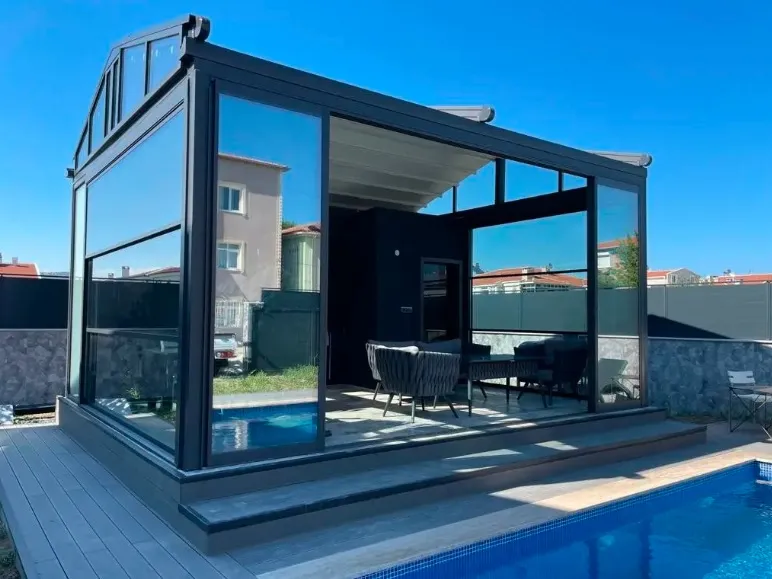
Vancouver outdoor space is expensive, overlooked and wet for eight months of the year, so the question is almost never how to get shade. It is how to make a space you already own usable in more weather, without losing the light, the view or the neighbour's goodwill.
- Leads with
- Patio Covers
- Named local projects
- 4
Burnaby
BC
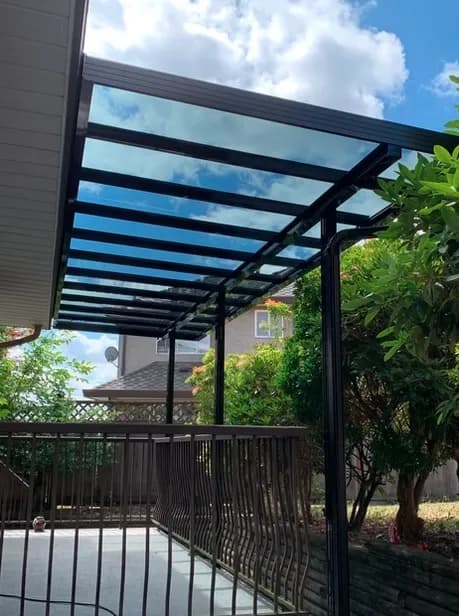
Burnaby asks two different questions of the same product range. On a terrace in Metrotown, Brentwood or Lougheed the binding constraint is who has to approve the work and what you are allowed to fix into a building envelope you share with everyone else in the tower. On a lot in Capitol Hill or on Burnaby Mountain it is grade, water and a ground snow load the City publishes at two different values. Work out which question your property is asking and the system almost chooses itself.
- Leads with
- Patio Covers
- Named local projects
- Coming soon
Kelowna & West Kelowna
BC
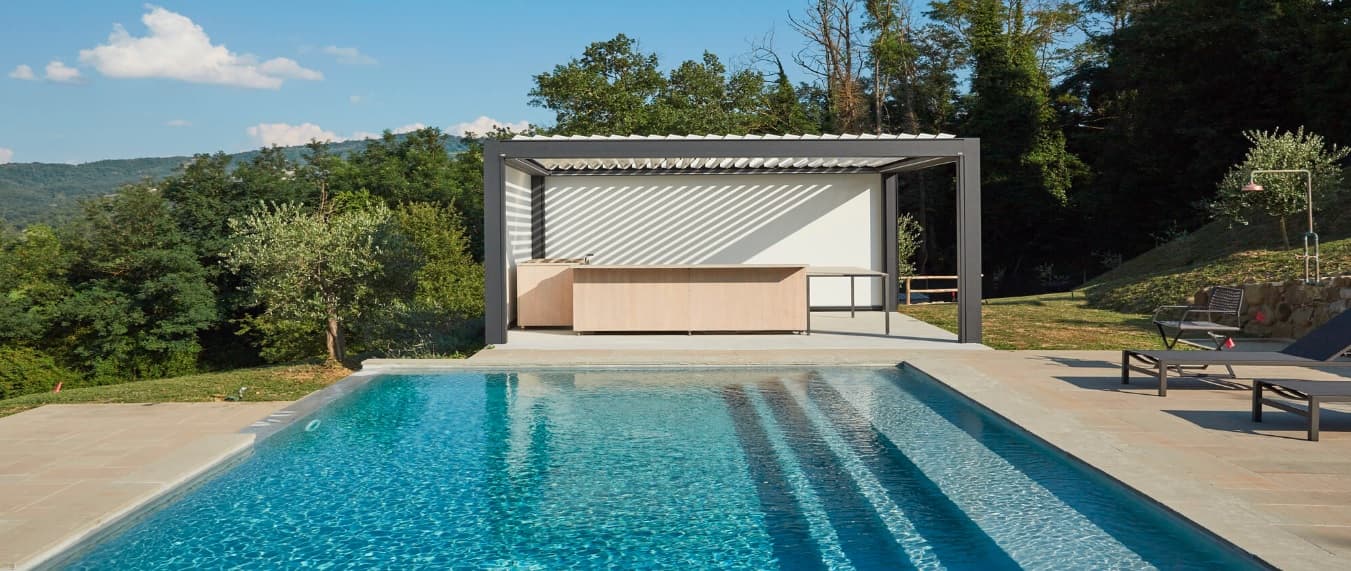
An Okanagan patio has to survive two opposite problems in the same year: summer afternoons hot and bright enough to drive people indoors, and shoulder seasons cold enough to end the evening early. A roof alone solves neither. Roof, screens, heating and lighting specified together solve both.
- Leads with
- Pergolas & Louvered Roofs
- Named local projects
- Coming soon
Coquitlam
BC
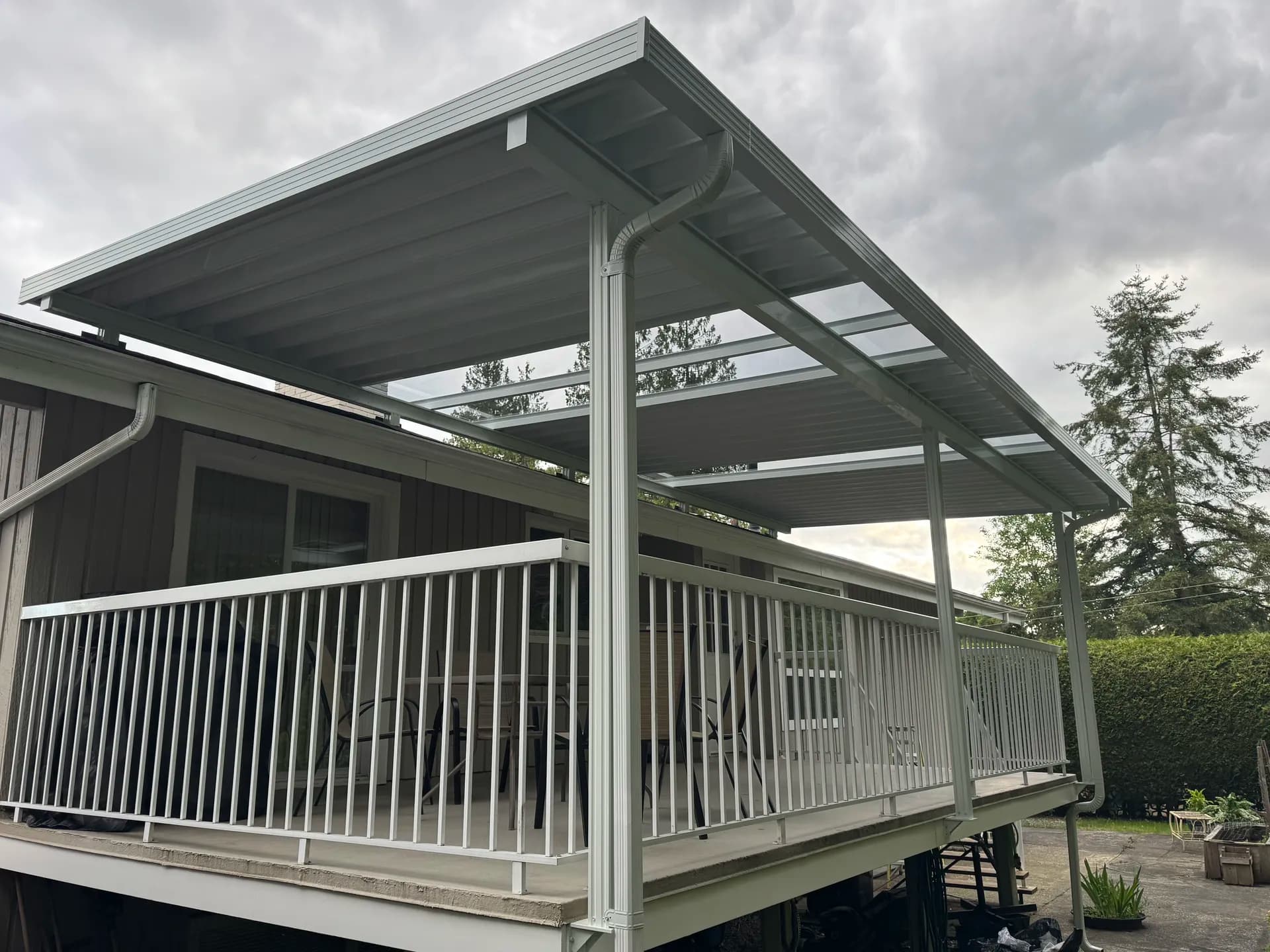
Coquitlam writes its own ground snow load and bands it by height above sea level, so a cover specified for the bottom of the city carries roughly half the load of the same cover on the upper slopes. Two addresses in one municipality are two different structural problems, which is why the first question here is where the ground is, not which roof you like.
- Leads with
- Patio Covers
- Named local projects
- Coming soon

Langley City & Township
BC
Langley is one name over two building departments and two completely different kinds of property. The City starts from a published exemption on a small urban lot. The Township starts from a bylaw where every structure needs a permit, on a lot big enough to put the structure almost anywhere. So the first decision on a Langley project is not which roof you want. It is which Langley you are in, and what the ground out there will give you.
- Leads with
- Exterior Shade Screens
- Named local projects
- Coming soon
North Vancouver, City & District
BC
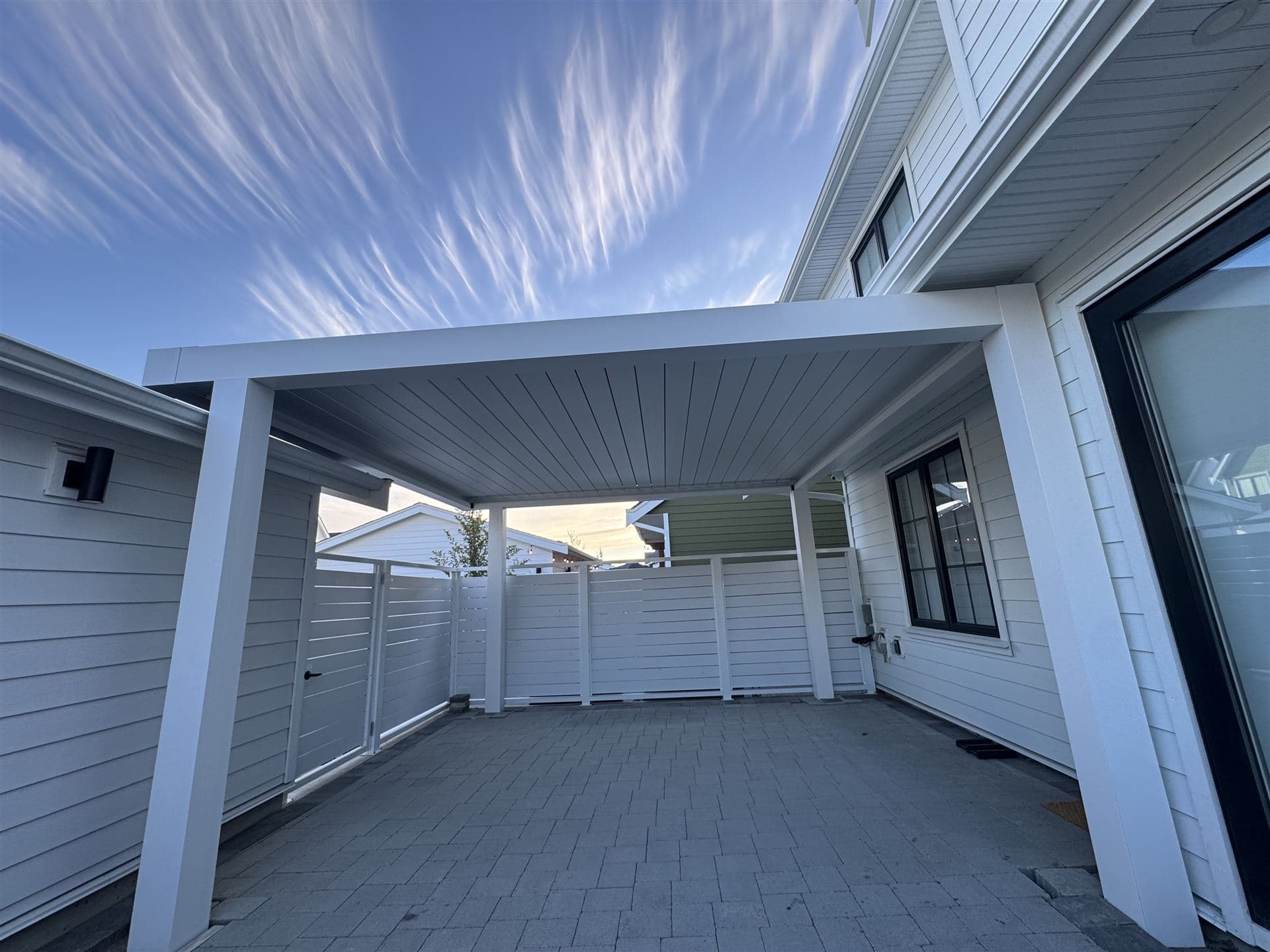
North Vancouver is two municipalities with different rules and a lot of properties built on a slope, in the rain, under trees. The projects that work here are the ones that treat water, ground and approvals as design inputs rather than as things to sort out on installation day.
- Leads with
- Patio Covers
- Named local projects
- Coming soon
Richmond
BC
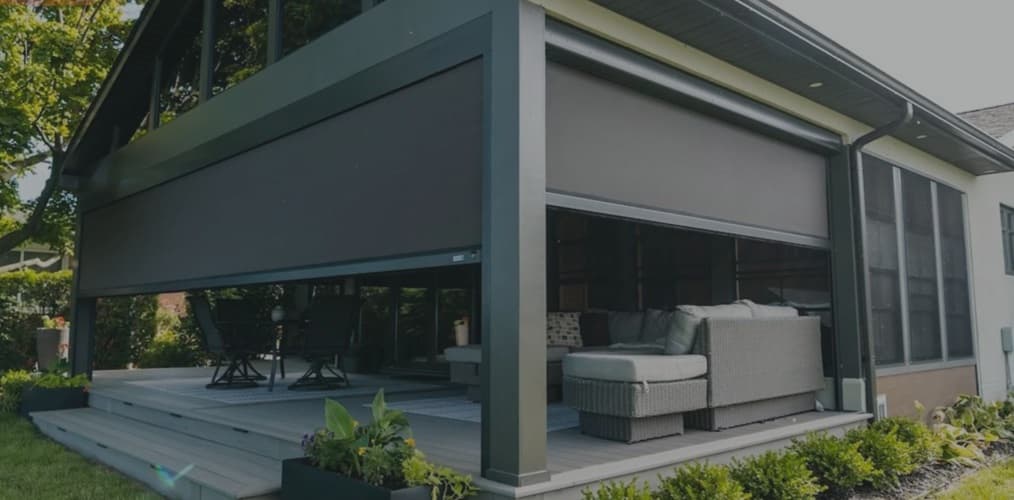
Richmond gives a covered outdoor structure an easy roof and a hard everything else. The design snow load is half the North Shore's, so the beams are not the problem. What decides the project is the ground the posts land on, which the City itself describes as still settling, and the wind, which arrives across open delta with nothing in front of it.
- Leads with
- Exterior Shade & Motorized Screens
- Named local projects
- Coming soon
Delta: Ladner, Tsawwassen & North Delta
BC
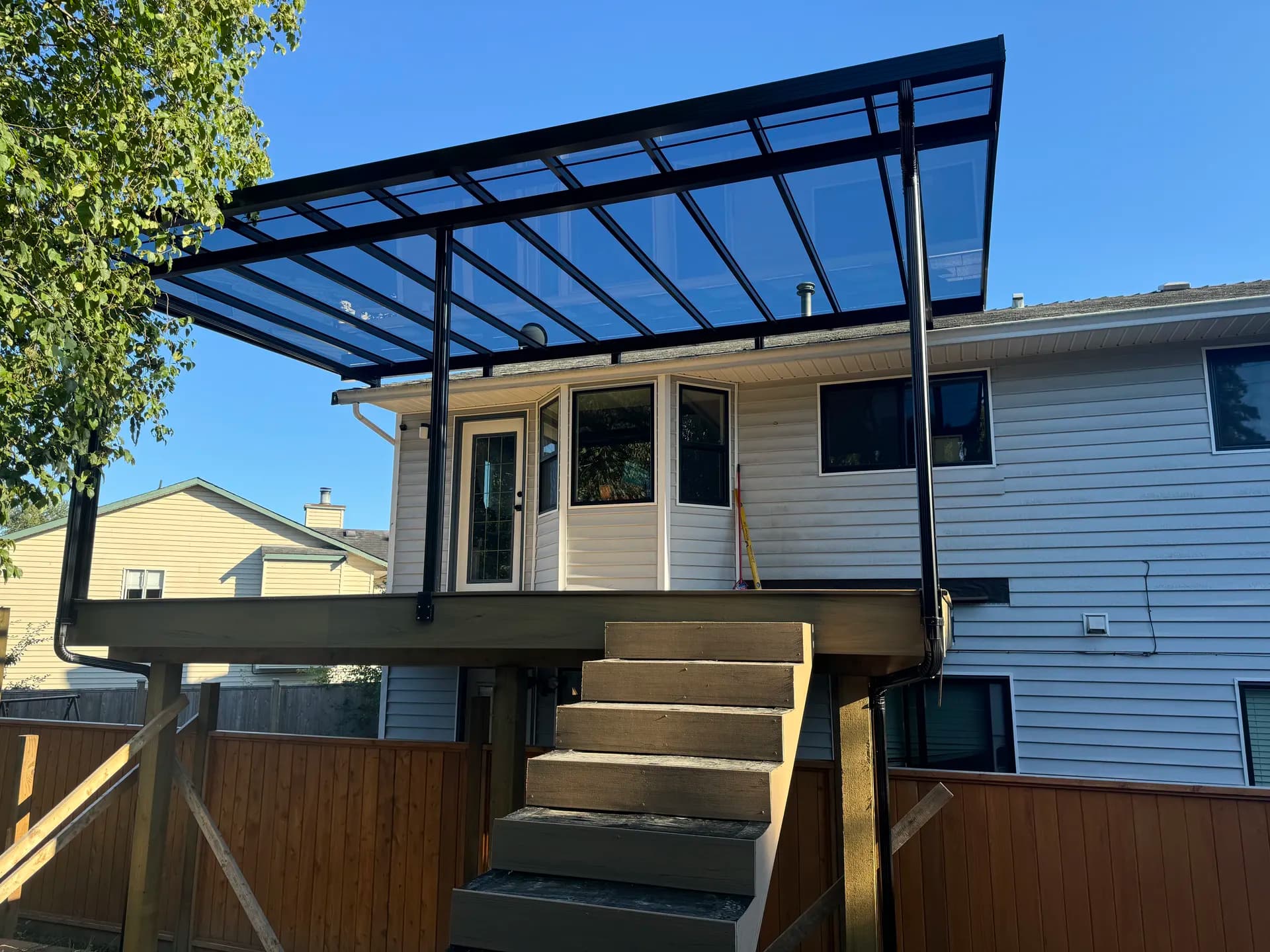
Delta carries the lightest published ground snow load in the Vancouver Region alongside one of its heaviest wind pressures, so a cover here is decided by what holds it down rather than by what holds it up. Then the rulebook charges that roof twice, once against lot coverage and again against a separate ceiling on how much of the lot may stop absorbing water. And whether you are in Ladner, Tsawwassen or North Delta, or on Tsawwassen First Nation land rather than in the City of Delta at all, changes which rulebook you are reading.
- Leads with
- Exterior Shade & Motorized Screens
- Named local projects
- Coming soon
New Westminster
BC
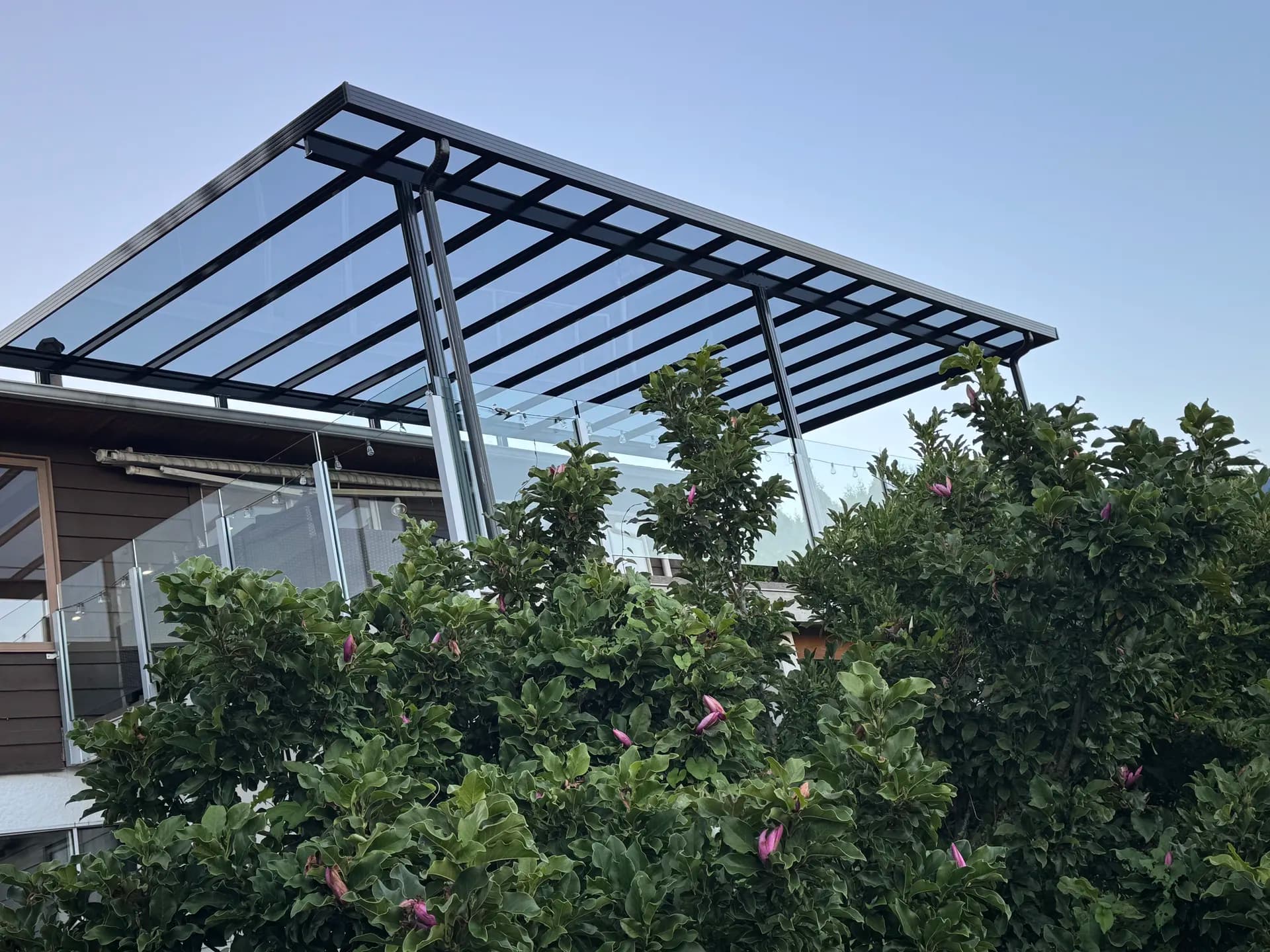
In two parts of New Westminster the City has already written down what a shade structure should look like, in numbers: a preferred slope, a projection range, a height to the underside and a list of materials and shapes that are out. Everywhere else the ordinary zoning and building rules apply. So the first question on a project here is often not how far it spans. It is which elevation it faces, and whether anyone has published an opinion about that elevation.
- Leads with
- Patio Covers
- Named local projects
- Coming soon
West Vancouver
BC
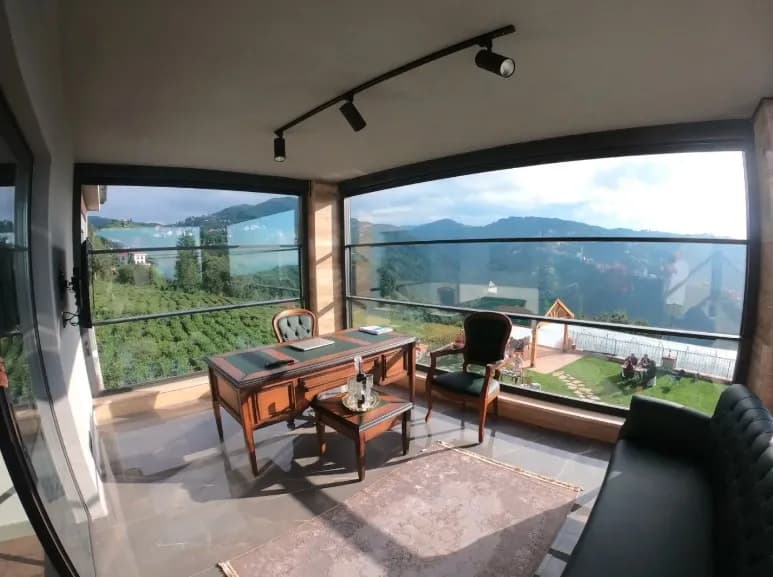
West Vancouver properties tend to sit on a slope, near a creek, close to forest or on the water, and any of those can add a planning step that has nothing to do with the structure you actually want. Getting the site questions answered first is what keeps the project simple.
- Leads with
- Rolling & Security Shutters
- Named local projects
- 1
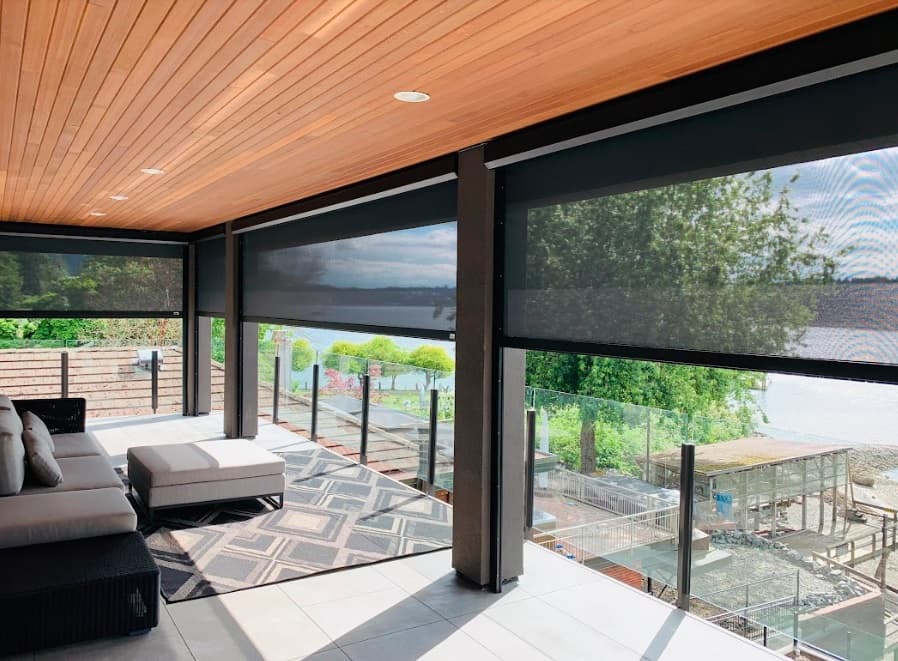
Port Moody
BC
Port Moody answers the question "how big can it be" with a map rather than a measurement. The same 10 square metre figure turns up in four different places in the City's documents doing four different jobs, and inside the environmental overlay it stops being a size at all and becomes a four part test that counts what is already standing in the yard, whether a tree protection zone is touched, and which named creek you are near. On a heritage street the City goes further still and publishes the awning shapes and materials it will accept.
- Leads with
- Exterior Shade & Motorized Screens
- Named local projects
- Coming soon
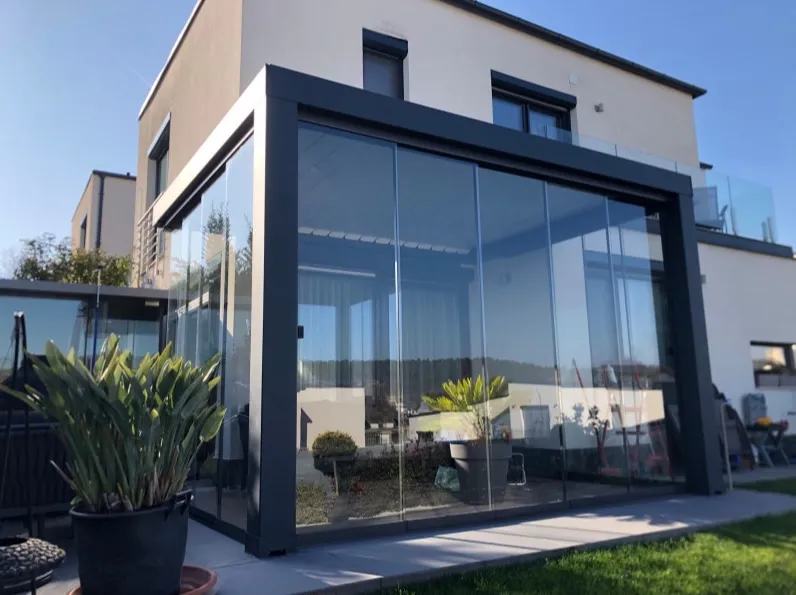
Squamish
BC
Wind is not a footnote in this valley, it is the brief. The published hourly wind pressure for Squamish is higher than for any city we have written about, and the District's own wildfire plan describes a summer where high winds are close to a daily event. Then it gets strange. The specification that wind pushes you toward, a system held in a track or steadied at grade, is exactly the one the District's Zoning Bylaw stops calling an awning, and that reclassification changes the paperwork more than the hardware does.
- Leads with
- Patio Covers
- Named local projects
- Coming soon
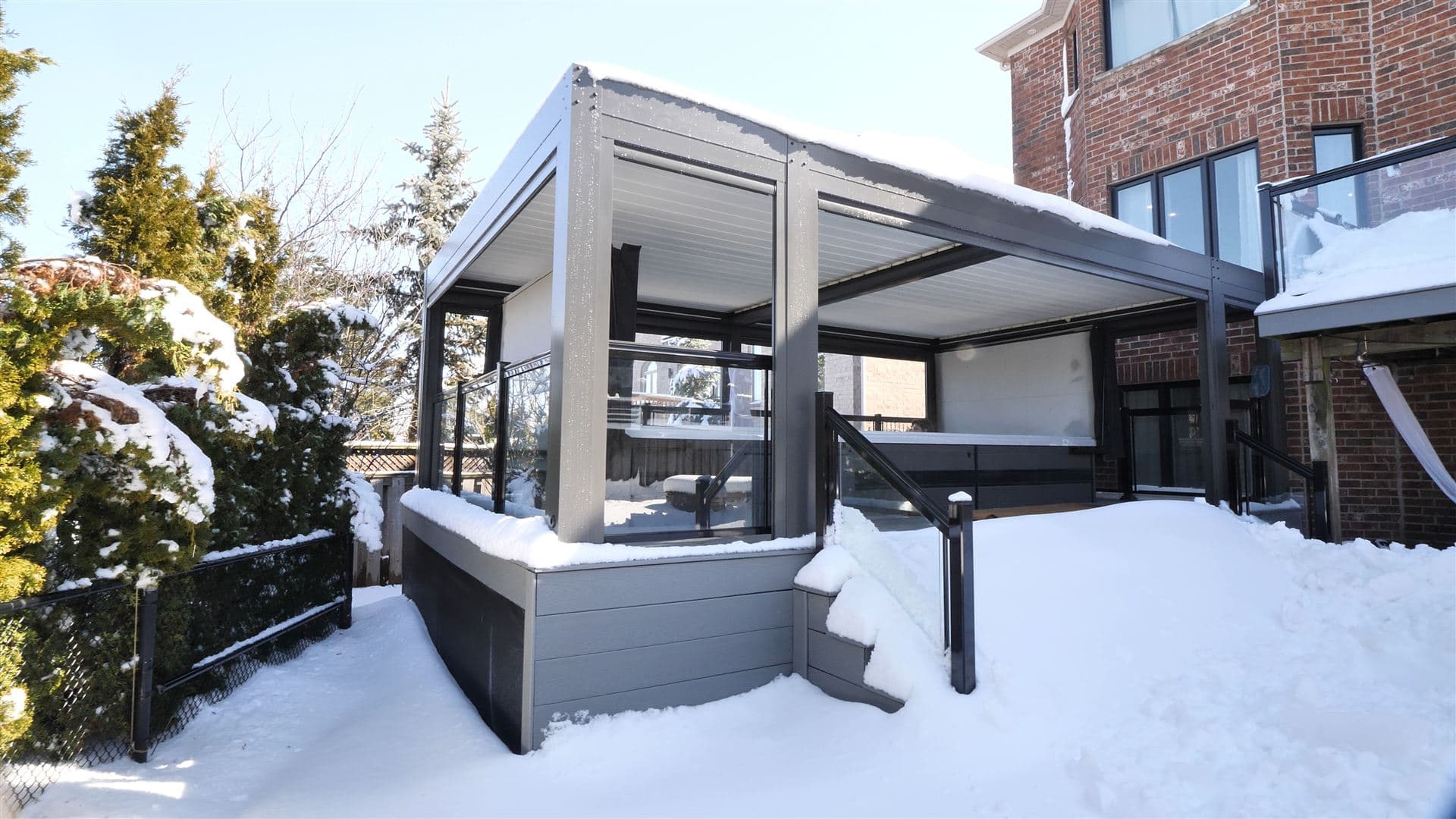
Whistler
BC
Whistler is the one municipality we work in that declines to publish a ground snow load and publishes an equation in its place, to be solved against the elevation of your own address, with no value offered at all above 1,000 metres. Because the answer runs past what the building code's prescriptive tables anticipate, a licensed Professional Engineer designing to Part 4 is the entry condition for a covered structure here rather than an upgrade somebody sells you later.
- Leads with
- Patio Covers
- Named local projects
- Coming soon
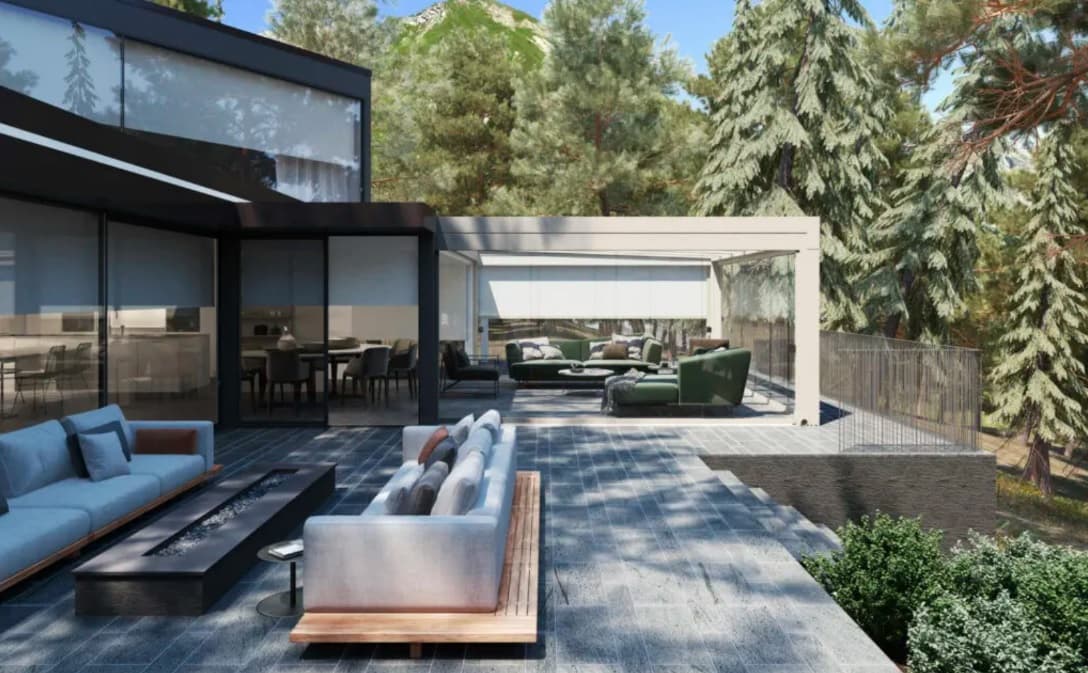
White Rock
BC
Two things decide a White Rock project and neither of them is the roof. The sun arrives at an angle for most of the hours anyone actually sits outside, which makes this a blades and screens problem rather than a bigger roof problem. And the Zoning Bylaw counts a covered deck as lot coverage while an uncovered one counts as nothing, so the ceiling on how much of the lot may be built on is often binding long before any setback is.
- Leads with
- Patio Covers
- Named local projects
- Coming soon
Somewhere else in British Columbia?
We supply and install well beyond the markets listed here, including across the Lower Mainland and on Vancouver Island. Rather than publish a page for every community and leave you guessing which ones are real, tell us where the project is and we will say plainly whether we can cover it. Call 604-500-5220 or send us the details.
Tell us where the project is.
Ready to plan your project?
Send us the location, the space and what you want to do out there. We will tell you what we can cover and which systems suit the site.